
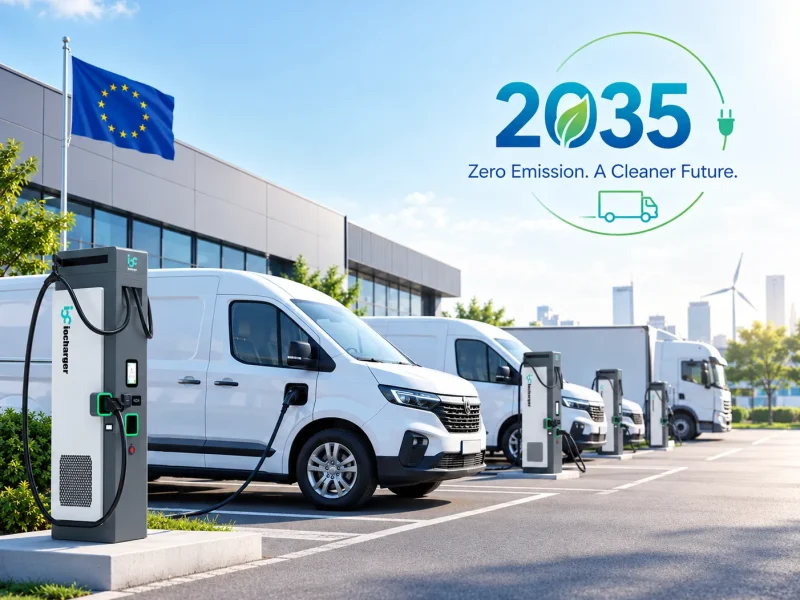
The regulatory landscape for European businesses is evolving. The EU has recently proposed greater flexibility in its 2035 road transport roadmap, moving away from the previous 100% tailpipe-emission reduction target for new cars and vans. However, the transition towards electric mobility remains a key part of Europe’s long-term strategy.
Fleet managers still face growing pressure to electrify their operations. Yet many businesses hesitate to move forward due to concerns about recurring hardware costs and future infrastructure upgrades. To avoid unnecessary investment and costly replacements, businesses need to start implementing scalable EV fleet charging solutions today.
The Evolving 2035 Regulatory Landscape
Under the European Commission’s proposed revision, the 2035 target for new cars and vans would shift from a 100% to a 90% reduction in tailpipe emissions. The remaining 10% would need to be compensated through mechanisms such as low-carbon steel, e-fuels and biofuels. This approach would allow certain technologies, including plug-in hybrids and internal combustion engine vehicles, to continue playing a role beyond 2035.
While the proposal introduces greater flexibility, the broader direction remains clear: Europe’s transport sector continues its transition to lower-emission mobility.
Businesses should not delay infrastructure planning. Grid capacity upgrades, charging infrastructure deployment, and adjustments to daily logistics can take considerable time. A well-planned fleet electrification strategy needs to start today. Early planning can also help businesses make better use of available incentives and ensure a smoother operational transition.
However, choosing the wrong charging equipment can create long-term financial risks.
Avoiding the “Rip and Replace” Trap
Many businesses make the same mistake at the early stage of fleet electrification: purchasing basic charging equipment that only meets their immediate needs.
A few years later, as the electric fleet grows, the existing power infrastructure may struggle to keep up. Closed charging systems can make upgrades difficult, sometimes requiring existing cables to be replaced and entire charging units to be upgraded or replaced. This is what we call the “rip-and-replace” trap.
Truly scalable infrastructure is designed to grow alongside a business. By planning the power supply and electrical infrastructure properly from the beginning, businesses can add more charging points as demand increases, rather than rebuilding the entire system.
This modular approach helps avoid repeated investment while keeping daily fleet operations running with minimal disruption.
Smart Power Management and Open Communication Standards: The Foundation of Scalable Charging Infrastructure
Two technologies play an important role in building scalable charging infrastructure: Dynamic Load Balancing and open communication standards.
Dynamic Load Balancing (DLB)
Available grid capacity is often one of the main limitations for commercial charging sites. Dynamic Load Balancing intelligently distributes available power among connected chargers based on real-time demand.
This helps prevent grid overload, makes better use of existing power capacity, and can reduce the need for costly grid upgrades.
Open Communication Standards
Software flexibility is equally important. The Open Charge Point Protocol (OCPP) enables charging stations to communicate with different charging management platforms.
By choosing OCPP-compatible chargers, fleet operators can connect their hardware to their preferred Charging Station Management System (CSMS), reducing dependence on a single software provider.
For long-term infrastructure planning, advanced communication standards such as OCPP 2.0.1 also provide a stronger foundation for smarter charging management and future system integration.
Modular Charging Capacity for Long-Term Expansion
Different fleets have different charging requirements. Businesses operating electric passenger vehicles may only need AC chargers for overnight charging. Delivery and logistics fleets, on the other hand, may require a combination of AC charging and DC fast charging to meet tighter vehicle turnaround schedules.
A scalable charging network should be able to adapt to these changing needs.
Modular infrastructure allows businesses to install charging capacity based on current demand and expand gradually as their fleets grow. For example, a business can initially deploy multiple AC chargers for overnight charging, then add more AC units or introduce DC fast chargers as the fleet expands and faster vehicle turnaround becomes necessary.
This flexible approach aligns infrastructure investment with actual fleet growth, eliminating the need to pay upfront for charging capacity that may remain unused.
How Iocharger Supports Your Transition
Building scalable EV fleet charging solutions
does not mean installing as many chargers as possible today. It means choosing the right hardware, power management solutions and communication standards to prepare for future demand.
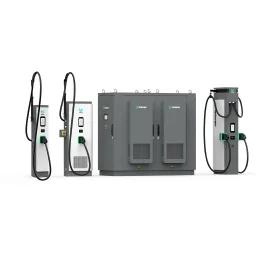
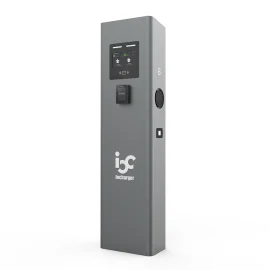
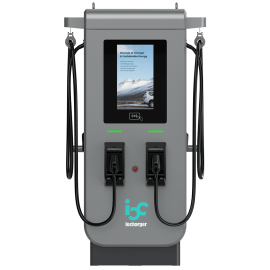
With a comprehensive AC and DC product portfolio, Dynamic Load Balancing solutions, and OCA-certified OCPP 2.0.1 technology, IOCharger helps European businesses build flexible, scalable charging infrastructure that grows alongside their fleet operations.

Start Planning Your Fleet Electrification Strategy Today
Planning your fleet electrification project? Contact Iocharger to explore charging solutions that meet your current needs and support your future expansion.