
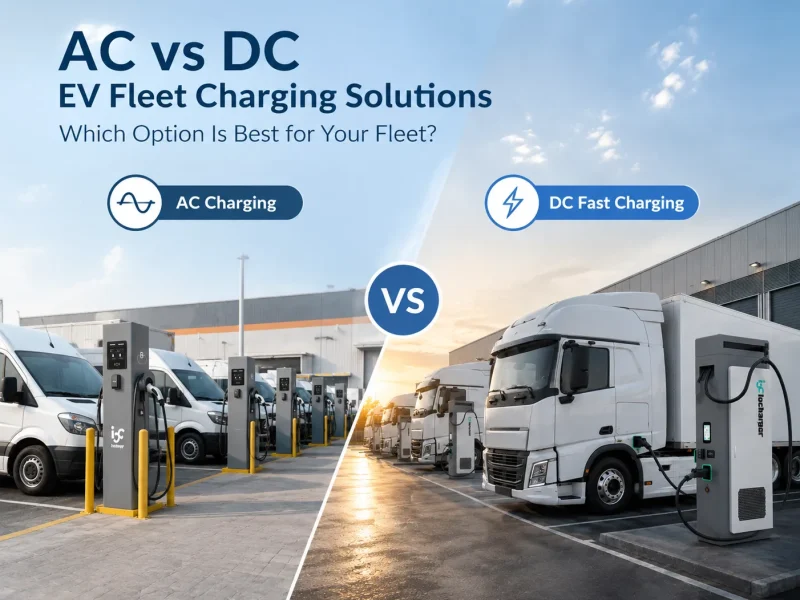
The transition to electric fleets is accelerating across Europe, and choosing the right charging system has become an important decision for fleet operators. AC vs DC EV Fleet Charging Solutions is a common question when companies plan their EV charging infrastructure. The best option depends on vehicle usage, charging time, energy demand, and future fleet expansion plans.
Both AC and DC charging technologies support fleet electrification, but they serve different operational needs. Understanding their differences helps businesses select the right combination of charging equipment.
Understanding AC and DC EV Charging for Fleets
AC charging uses alternating current from the electrical grid. The vehicle’s onboard charger converts AC power into DC power before storing energy in the battery. Because the conversion happens inside the vehicle, AC charging usually provides lower charging power.
Most commercial AC chargers provide power between 7kW and 22kW. They are suitable for vehicles that remain parked for several hours, such as overnight depot charging, office parking, or employee vehicles.
DC charging works differently. The power conversion happens inside the charging station, allowing electricity to flow directly into the vehicle battery. This reduces charging time and makes DC-snabbladdare suitable for fleets with intensive daily operations.
For example, delivery vans, logistics vehicles, and service fleets that need quick turnaround times can benefit from DC charging. Vehicles can recharge during short breaks and return to operation faster.
AC EV Chargers: A Practical Choice for Overnight Fleet Charging
For many businesses, AC charging is the foundation of an EV depot charging strategy. It offers a balance between installation cost, energy management, and daily charging requirements.
AC chargers are commonly used for:
* Company vehicles parked overnight
* Delivery fleets with fixed schedules
* Workplace charging facilities
* Long-duration parking locations
Iocharger provides commercial AC EV charging solutions designed for fleet environments. Its AC chargers support intelligent charging management, helping operators distribute available power efficiently across multiple vehicles.
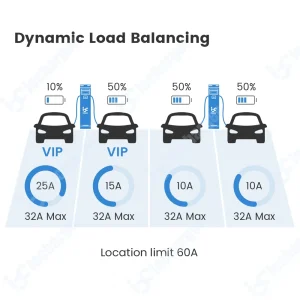
Combined with smart charging software, AC infrastructure can reduce peak electricity demand and improve energy use. This makes it a practical solution for companies that operate predictable fleet routes.
DC Fast Chargers: Supporting High-Utilization Fleets
DC fast chargers are designed for operations where vehicle downtime directly affects productivity. Logistics centers, transportation hubs, and large commercial depots often host them.
The main advantages of DC charging include:
* Faster charging speed
* Higher vehicle availability
* Support for demanding fleet schedules
* Better performance for long-distance operations
However, DC charging requires higher electrical capacity and usually involves greater installation investment. Fleet operators need to evaluate grid availability, charging frequency, and operational requirements before choosing DC infrastructure.
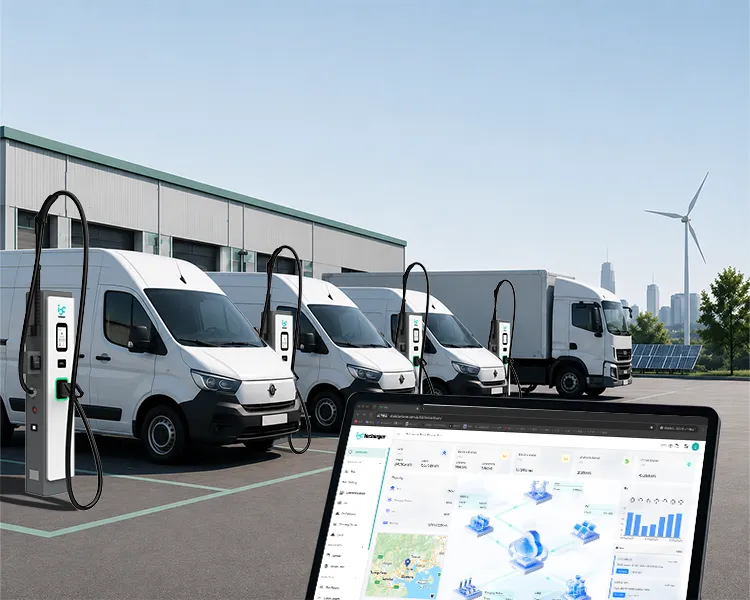
Iocharger offers DC fast charging solutions for commercial fleets that require reliable high-power charging. With support for intelligent charging management and OCPP communication, these chargers can integrate with most modern energy management platforms.
Why a Hybrid Charging Strategy Works for Many Fleets
Many European fleet operators do not choose only AC or only DC charging. Instead, they combine both technologies to create a flexible charging network.
A typical fleet charging strategy may include:
* AC chargers for overnight depot charging
* DC fast chargers for daytime energy top-ups
* Smart charging systems for load balancing
This approach allows companies to control infrastructure costs while maintaining vehicle availability. It also supports future fleet growth without requiring a complete redesign of the charging system.
Key Factors When Choosing Fleet Charging Infrastructure
Before investing in commercial EV charging stations, fleet managers should consider several factors:
Vehicle usage pattern
Daily mileage, route length, and parking time determine the required charging speed.
Fleet size and future growth
A scalable charging system can support additional electric vehicles as the fleet expands.
Grid capacity
Available electrical power affects how many chargers can operate simultaneously.
Charging management capability
Smart EV charging and OCPP-enabled chargers provide better control over energy consumption and charger operation.
Choosing the Right Solution with Iocharger
There is no single charging solution that fits every fleet. The right choice depends on operational requirements, charging schedules, and long-term electrification plans.
For fleets with predictable parking times, AC EV chargers can provide efficient and cost-effective charging. For businesses that require rapid charging and maximum vehicle availability, DC fast chargers can provide additional operational flexibility.
Iocharger helps businesses design complete Laddningslösningar för elfordonsflottor, including AC chargers, DC fast chargers, smart charging systems, and scalable energy management options. By selecting the right charging combination, companies can build a reliable EV charging infrastructure that supports their transition to electric mobility.